John Wagner / Waggoner
Biography
-
Date of Birth 1758
-
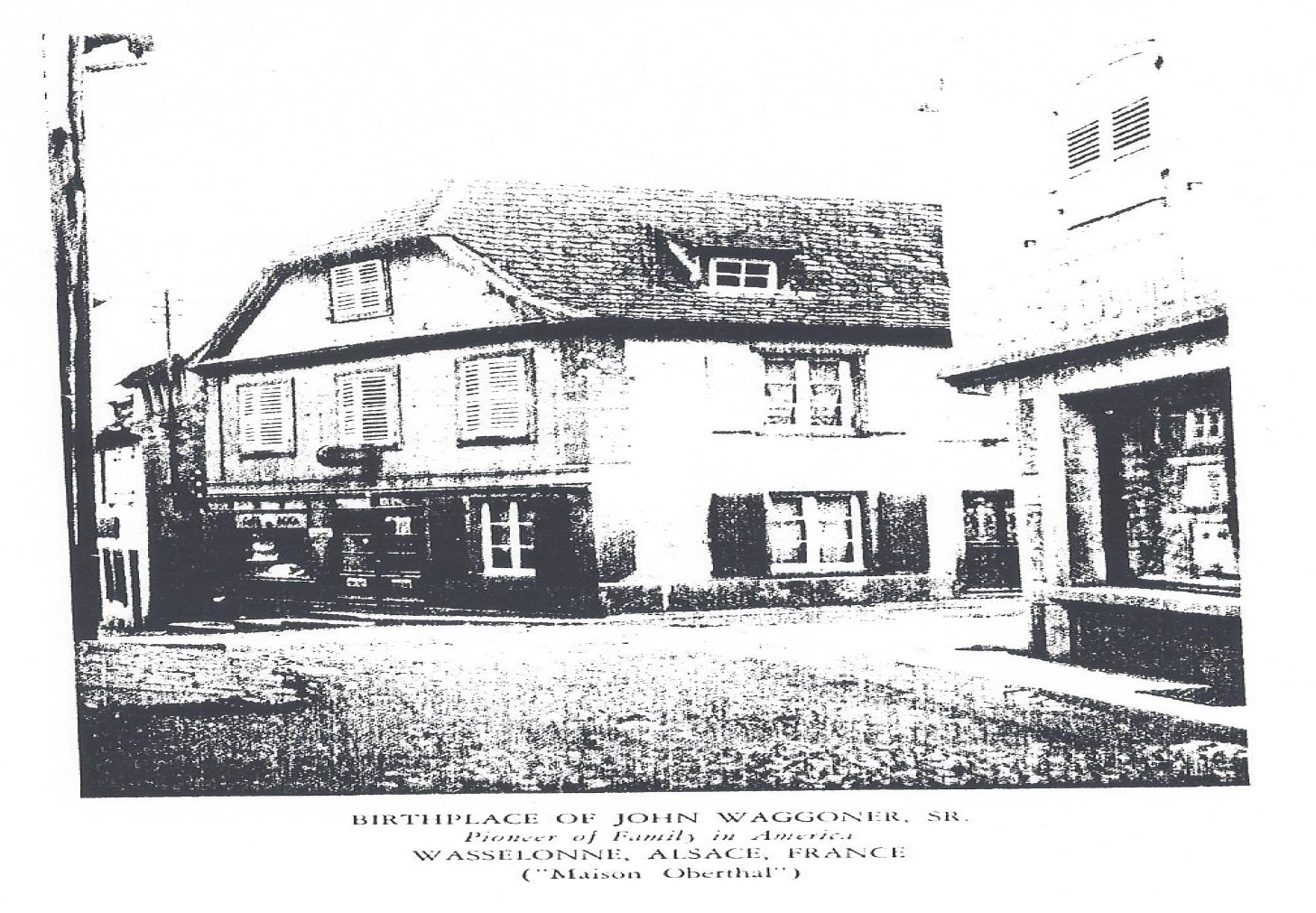
Place of Birth Wasselonne, Departement du Bas-Rhin, Alsace, France
-
Date of Death December 15, 1842
-
Place of Death Fremont, Sandusky County, Ohio, USA
-
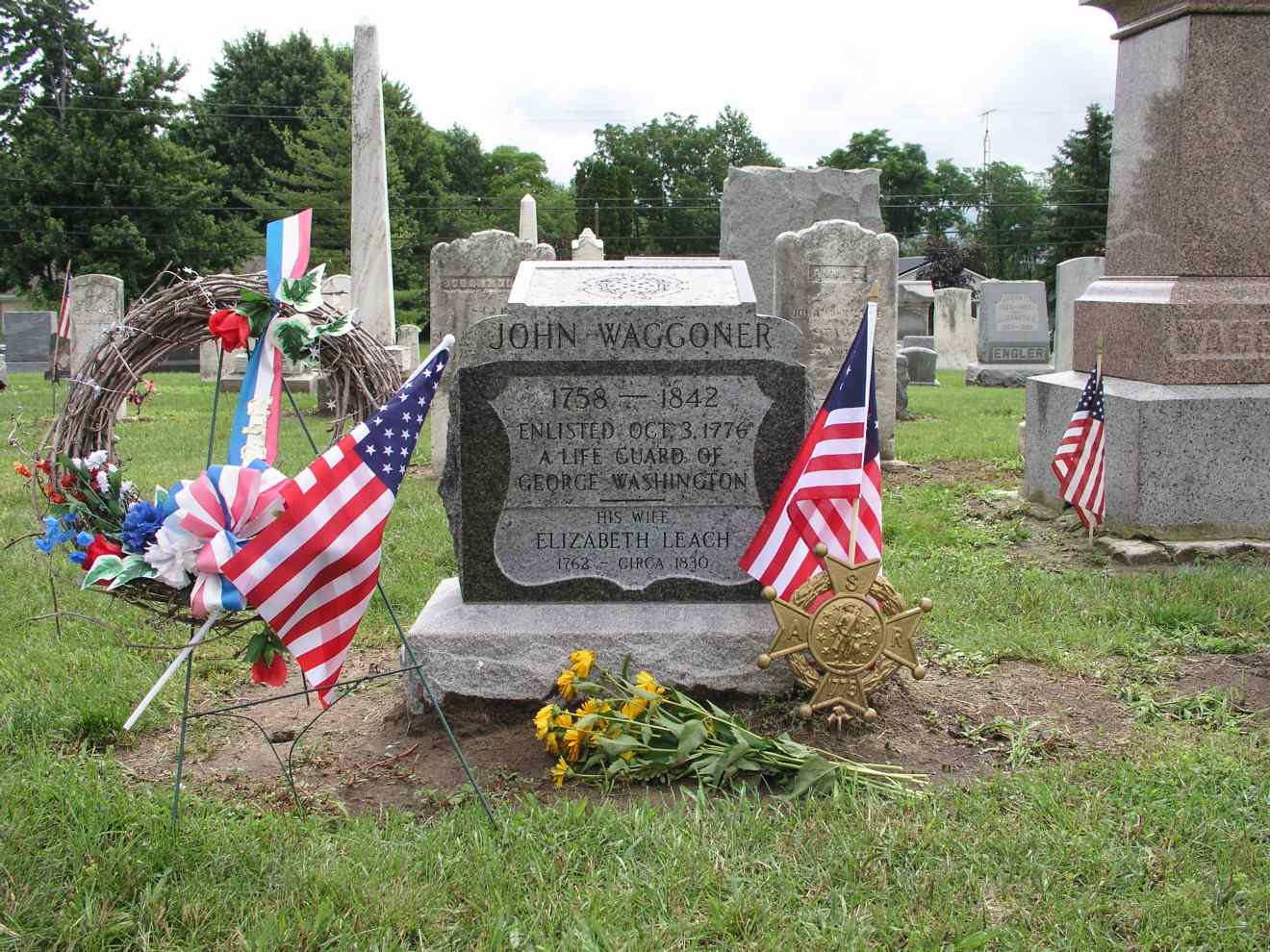
Place of Burial Four Mile Cemetery, Fremont, OH
-
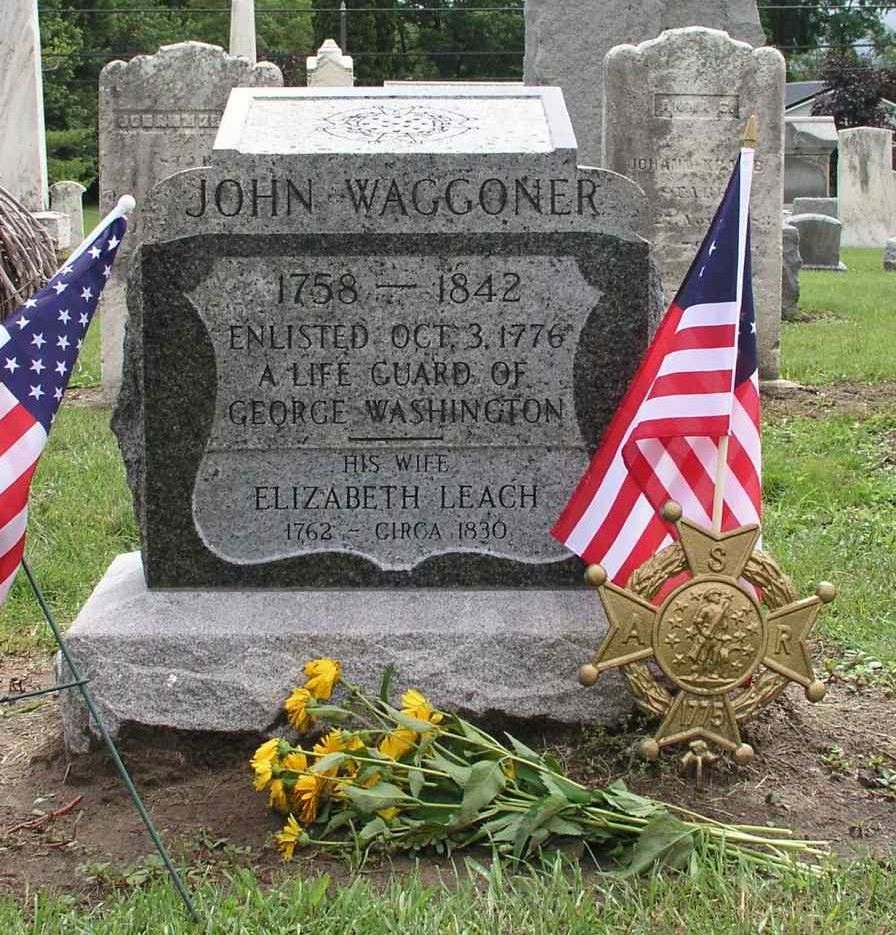
Burial Notice John Waggoner, 1758-1842
Parents
-
Father’s Name Francois Antoine Wagner
-
Mother’s Name Jacoba (Kling) Wagner
-
Parent’s Family Name Francois and Jacoba (Kling) Wagner Family
Brothers and Cousins
-
Brother’s Name Jacob Wagner
-
Cousin’s Name Peter Wagner
First Spouse
-
First Wife’s Name Elizabeth (Minic) (Leach) Waggoner
-
First Wife’s Date of Birth 1762
-
First Wife’s Place of Birth Hagerstown, Washington Co., MD
-
First Wife’s Date of Marriage July 18, 1785
-
First Wife’s Date of Death 1830
-
First Wife’s Place of Burial Four Mile Cemetery, Fremont, OH
-
First Wife’s Burial Notice Elizabeth (Leach) Waggoner, 1762-1830
-
Children of First Spouse
Elizabeth (Waggoner) Bowman, 1788-1874
John B. Waggoner Jr, 1790-1847
David Wagner, 1792-1865 (twin boy)
Jacob Wagner, 1792-1876 (twin boy)
Nancy (Waggoner) Macklin, 1798-1891
Second Spouse
-
Second Wife’s Name Sarah (Minic) (Leach) Waggoner (sister of 1st wife)
-
Date of Birth April 11, 1778
-
Date of Marriage June 20, 1833.
-
Date of Death February 6, 1856
-
Second Wife’s Burial Notice Sarah (Leach) Waggoner 1778-1856
Children of Second Spouse
Catherine (Waggoner) Smith, 1797-1852
Personal History
John Wagner and his families resided in Frederick County Maryland, and in Perry and Sandusky Counties in Ohio.
John Wagner’s name was changed to John Waggoner sometime after his arrival in America in 1771 when an English Clerk changed the spelling of his name from WAGNER to WAGGONER, apparently the English spelling, and his name was spelled that way ever since.
John Waggoner was sometimes referred to as John Waggoner, Sr.
Military Service
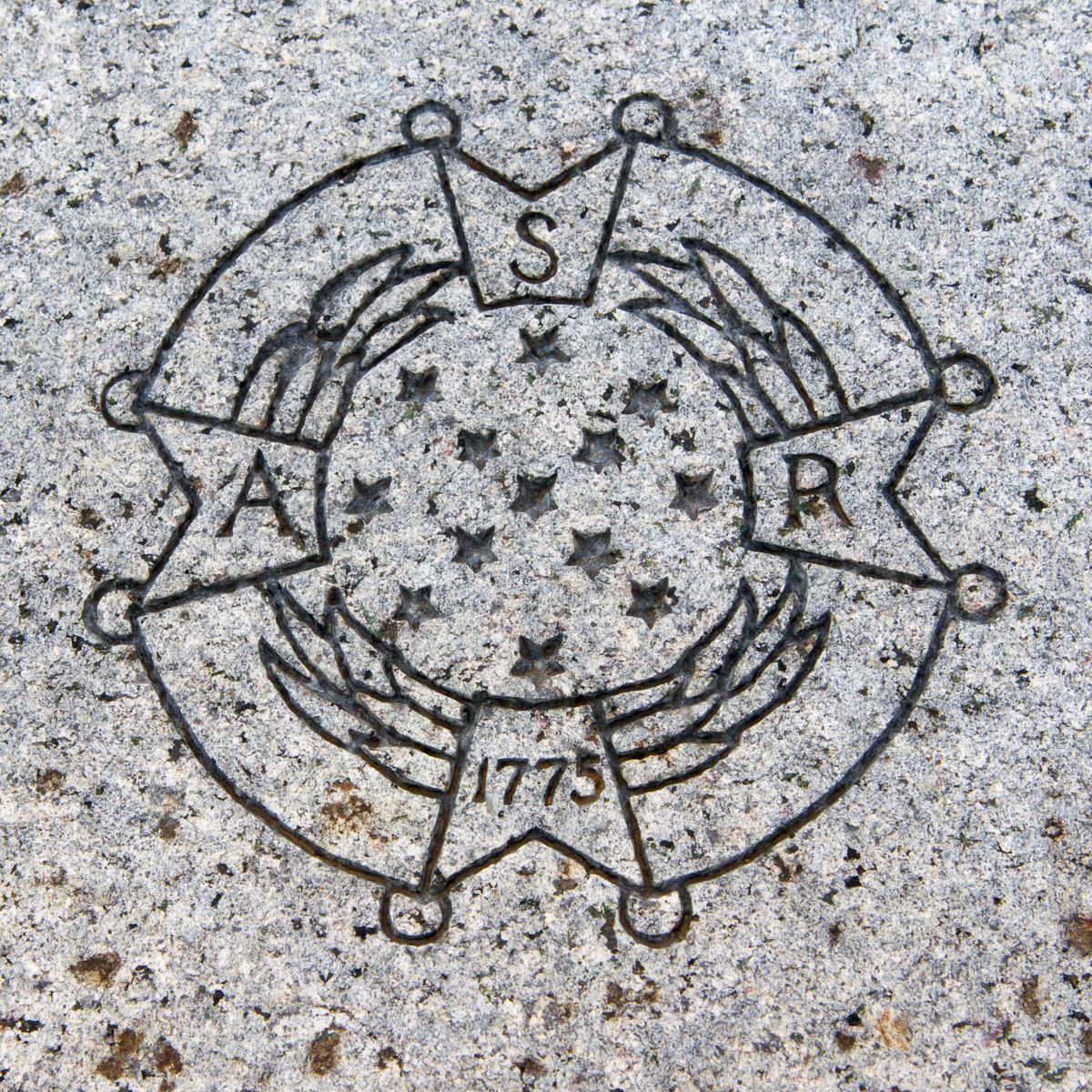
John Waggoner, brother of Jacob Waggoner, a young single man, enlisted Oct. 3, 1776 at or near Reading, PA for service in the American Revolutionary War 1775-1783 in Valentine Creager's Company as private. He served until the end of the war.
He served in the Provost Guard - Von Heer's Light Dragoons in the Revolutionary War Military Service and was a Pvt under Capt. Bartholomew Von Heer's Company of Horse.
John Waggoner was also a member of George Washingtons Life-Guard Military Service. He saved George Washington’s life in battle and was given a sword and cane by George Washington. (See these objects in the Ref Link below)
On account of his service, John was granted one hundred acres of bounty land on January 21, 1795. After John’s death, his widow, Sarah (Minic) Waggoner, applied for his military pension, and was awarded a pension of $100 per year, beginning November 1853. Sarah died the following year in February.
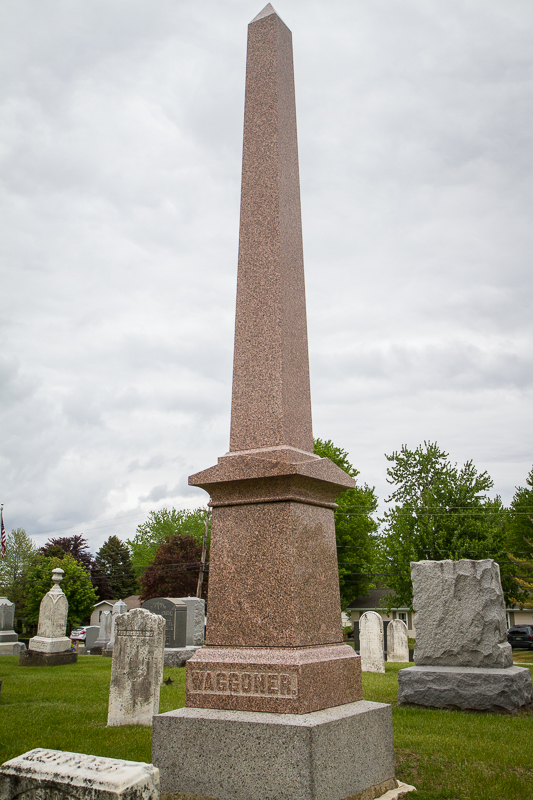
The Waggoner Monument faces west in the center of the Fourmile House Cemetery on Fourmile House Road, NW of Fremont, Ohio. Just to the NW of this monument is the grave of Revolutionary War patriot John Waggoner. Several other Waggoners are also buried nearby. My grandmother was a Wagoner, from Fulton County, Indiana. John Waggoner, Sr. was her 2nd Great-grandfather and my 4th.
Added by: Arthur T LaBar on 18 May 2016Ref Link: John Waggoner Pilgrimage
John Waggoner Remembrance
"It is with little pleasure that on Friday morning last, between 5 and 6 o'clock we met our venerated friend, John Waggoner of Washington Twp., in this county. He had come to town as he is wont to do for the purpose of delivering a periodical supply of butter to his customers. Mr. Waggoner is the last or the last but one, of the surviving Life Guards of General Washington; he is now about 80 years old."*** Newspaper article dated June 3, 1841 ***
“This aged Patriot, the last member of George Washington's Life Guards, departed this life at his residence, 4 1/2 miles west of Lower Sandusky, on Thursday morning last, in the 81st year of his age. Mr. Waggoner entered the army when he was 16 years of age, and continued in the service until the close of the Revolutionary war. For five years, if we are correctly informed, he was attached to the Life Guards of Gen. Washington, and suffered with that great and good man the perils and privations of that eventful period. In private life Mr. Waggoner was a most exemplary citizen, beloved by all who knew him. The Artillery Company of this village attended the funeral, and paid the usual honors on such occasions. The Rev. Mr. Rawhizer delivered the sermon in the German language--after which Homer Everett made a few appropriate remarks.”[Lower Sandusky Democrat]
Newspaper Archive
*** The Experiment, Norwalk, Ohio, 28 Dec 1842, p. 4 ***
VON HEER'S LIGHT DRAGOONS
Von Heer's troop was organized under a resolution of Congress of May 27, 1778, establishing a Provost, to consist of a captain, four lieutenants, one clerk, quartermaster sergeant, two trumpeters, two sergeants, five corporals, forty-three provosts or privates, and four ex-carboniers; they were mounted and accoutered as light dragoons. A summary of their duties was included in orders dated October 10, 1778 (see orderly book, postea); they were to apprehend deserters, rioters, and stragglers. In battle they were posted in the rear to secure fugitives. In short, their duties were the usual ones of a provost guard, and the corps was styled the Troop of Marechausse. Capt. Bartholomew Von Heer resigned from Procter's artillery to take this command, and in some papers he is styled "Provost Marshal of the Continental Army". The men were all recruited in Pennsylvania—
*** Washington's letter, Penn'a Archives, O. S., ix, page 486 ***
Photos